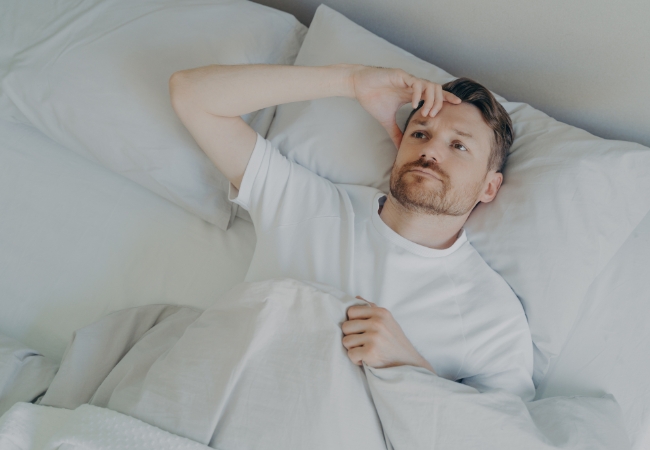
Sleeping well seems obvious, until it doesn't happen anymore. You lie in bed, but your mind remains active. You are tired, but still cannot relax. Or you do fall asleep, but wake up often and don't feel rested in the morning.
Sleep problems have a significant impact on your daily functioning. Your concentration decreases, you become overstimulated more easily, emotions hit harder, and recovery after exertion takes longer. When poor sleep persists, your entire system can become unbalanced.
NeurOptimal® neurofeedback can offer valuable support for sleep problems.. It is a gentle form of brain training that helps the brain to regulate itself better. Not by forcing sleep, but by giving the brain feedback on its own activity. This allows the nervous system to gradually develop more rest, stability, and flexibility.
Why sleep is so important
During sleep, your body recovers, your brain processes information, and your nervous system gets a chance to rest. Good sleep helps with concentration, mood, sensory processing, memory, recovery, and energy.
When you sleep poorly for a prolonged period, you often notice it on multiple levels. You get tired more quickly, your head feels fuller, you react more emotionally, and ordinary daily tasks require more effort. You can also become more sensitive to stress, light, noise, and crowds.
Sleep problems therefore rarely occur in isolation. They are often related to stress, burnout, overstimulation, post-COVID, post-concussion symptoms, anxiety, or a nervous system that has difficulty returning to a state of rest.
What sleep problems are common?
Sleep problems can manifest in various ways. Some people have difficulty falling asleep, while others tend to wake up frequently or much too early.
Common sleep problems include:
- difficulty sleeping;
- Waking up frequently.;
- Waking up early;
- light sleep;
- waking up not rested;
- Tossing and turning in bed;
- An uneasy or alert feeling;
- waking up with a full head;
- daytime fatigue;
- poorer concentration;
- increased sensitivity to stimuli;
- Relapse after busy days.
At Brain-Fit, we don't just look at the number of hours slept, but primarily at the quality of sleep and recovery. Do you wake up feeling rested? Does your brain recover sufficiently? Can you process stimuli better during the day? Does your head feel calmer?
Why does your head stay “on”?
Many people with sleep problems recognise that their mind stays active as soon as they want to sleep. During the day you might still be able to get on with things, but as soon as things quieten down, the thinking, planning, worrying or processing begins.
This often happens because the nervous system stays in an "action mode" for too long. Your brain remains alert, even when there's no longer a direct reason to be. This makes the transition to relaxation and sleep more difficult.
You can tell this by:
- Ruminating as soon as you get into bed;
- difficulty relaxing;
- tense muscles;
- unease in your body;
- palpitations;
- Waking up to small sounds;
- to startle easily;
- Being tired but still unable to sleep.
NeurOptimal® neurofeedback aligns well with this, as it focuses on self-regulation. It helps the brain not by forcing it, but by providing feedback. This gives the brain repeated opportunities to more smoothly switch between alertness, relaxation, and recovery.
How does NeurOptimal® neurofeedback work for sleep problems?
During a NeurOptimal® neurofeedback session, you sit relaxed in a chair. You listen to music or watch a film. Brain activity is measured via sensors. When the system registers sudden changes or instability, you will hear a brief interruption in the sound.
The interruption gives your brain information about its own activity. You don't need to consciously do anything with it. You don't need to concentrate, analyse anything, or perform a relaxation exercise correctly.
This is particularly helpful for sleep problems. Many people have already tried everything: breathing exercises, meditation, sleep apps, supplements, reducing screen time, or having fixed bedtimes. NeurOptimal® neurofeedback works differently. It doesn't demand a performance, but rather gives the brain information with which it can improve its own regulation.
Why can NeurOptimal® neurofeedback help with sleep problems?
Sleep requires a flexible nervous system. During the day, you need to be able to be alert and active. In the evening, your body needs to be able to switch off. And at night, your brain needs to experience sufficient safety and rest to sleep more deeply.
When your system is out of balance, the brain remains in a state of alertness for too long. NeurOptimal® neurofeedback The brain supports the restoration of flexibility. The system doesn't try to lull you to sleep, but helps the brain to switch more easily.
Many clients experience changes after multiple sessions such as:
- easier to relax;
- fall asleep faster;
- sleep deeper;
- wake up less often;
- wake up more peacefully;
- worry less in bed;
- more recovery during the night;
- less rushed feeling during the day;
- Better concentration;
- less overstimulation.
The goal isn't just “more hours of sleep”. The aim is for your nervous system to relax better, allowing sleep to occur more naturally.
Sleep problems with stress and burnout
Sleep problems are common with stress and burnout. You're exhausted, but your body remains alert. Your mind might know you need to rest, but your system still feels tense.
This can make it difficult to fall asleep, lead to light sleep, or cause you to wake up in the middle of the night. Sometimes you wake up feeling restless, as if your body is already switched “on” before the day has even begun.
NeurOptimal® neurofeedback can help with stress and burnout supportive, because the brain receives feedback without you having to actively work on relaxation. For people who are already overloaded, that is often pleasant. You don't have to do any more. Your brain calmly receives information that can help with more balance and resilience.
Sleep problems with overstimulation
When you are overstimulated, your brain has had to process a lot of information during the day. Sounds, conversations, screens, workload, or social activities can build up. In the evening, your body is tired, but your head is still processing.
This can make sleeping difficult. You feel wired, alert, or full. Sometimes you manage to sleep, but you wake up feeling unrested because your system hasn't recovered deeply enough.
NeurOptimal® neurofeedback can help your brain to process stimuli more smoothly. When you're less easily overwhelmed during the day, your system often calms down more easily in the evening too. Many clients notice that their head feels less heavy over time and that they recover better after busy days.
Sleep problems after a concussion or post-COVID
Even after Concussion, PCS of post-COVID Sleep problems occur regularly. The brain has become more sensitive and becomes tired or overstimulated more quickly. At the same time, sleeping can become more difficult.
That's frustrating, as sleep is so important for recovery. Poor sleep can exacerbate symptoms such as headaches, brain fog, dizziness, concentration problems, and sensitivity to stimuli.
NeurOptimal® neurofeedback requires little active effort. You do not need to do strenuous cognitive exercises or perform any tasks. This makes it well-suited for people who are easily overstimulated or have low resilience. The goal is to support the brain and nervous system in achieving more rest, recovery, and regulation.
How many sessions are needed for sleep problems?
At Brain-Fit, when dealing with sleep problems, we often consider a course of about 15 to 20 sessions. Some people notice a change sooner, for example, that they sleep more deeply or wake up more refreshed. For others, the effect builds up gradually.
This depends on various factors, such as:
- how long the sleep problems have existed;
- how much stress is involved;
- whether burn-out is involved;
- the degree of overstimulation;
- screen time and stimulation load;
- recovery moments during the day;
- complaints after concussion or post-COVID;
- General load capacity.
During the process, we look not only at sleep duration, but especially at sleep quality and daily functioning. Do you wake up more rested? Do you recover better? Can you tolerate stimuli better? Does your head feel calmer? Do you have more energy during the day?
These are important signals that the nervous system is developing more stability.
The PNEI vision for sleep problems
At Brain-Fit, we combine NeurOptimal® neurofeedback with guidance from the PNEI perspective. PNEI stands for Psycho-Neuro-Endocrino-Immunology. This means we look at the interconnectedness of the psyche, brain, nervous system, hormones, immune system, stress, sleep, nutrition, and recovery capacity.
When dealing with sleep problems, that broad perspective is important. Sleep is influenced by many factors, such as stress, blood sugar, caffeine, alcohol, light, screen use, exercise, breathing, hormones, inflammatory activity, and stimulus load.
That's why at Brain-Fit, we don't just look at the neurofeedback sessions themselves, but also at what helps your system relax better on a daily basis. Sometimes small adjustments in rhythm, diet, breathing, or recovery periods can already be valuable alongside NeurOptimal® neurofeedback.
Is NeurOptimal® neurofeedback a treatment for insomnia?
NeurOptimal® neurofeedback is not a medical treatment that cures insomnia. It is a form of brain training that supports the brain's self-regulating ability.
That distinction is important. Sleep problems can have various causes. Consider stress, pain, hormonal changes, medication, sleep apnoea, psychological issues, or medical conditions. For severe, long-term, or unexplained sleep problems, it is advisable to contact your GP.
NeurOptimal® neurofeedback can be a valuable addition when you notice your brain is struggling to calm down, your nervous system remains on high alert, or your sleep is disrupted by stress, overstimulation, or recovery issues.
NeurOptimal® neurofeedback is suitable for anyone experiencing sleep problems.
NeurOptimal® neurofeedback may be suitable when you experience complaints such as:
- difficulty sleeping;
- Sleep problems;
- Waking up early;
- waking up not rested;
- Tossing and turning in bed;
- Restlessness in your head;
- stress-related symptoms;
- burnout symptoms;
- Overstimulation;
- post-concussion symptoms;
- post-COVID symptoms;
- Daytime fatigue.
An intake is important to determine if NeurOptimal® neurofeedback is suitable for your situation. Sometimes, additional medical, psychological, or sleep-focused guidance is necessary. Brain-Fit is happy to help you assess which approach is appropriate.
NeurOptimal® neurofeedback with Brain-Fit
Brain-Fit We support people with sleep problems, stress, burnout, overstimulation, post-COVID and post-concussion symptoms from our locations in Hillegom and Amstelveen. Clients come from areas including Haarlem, Leiden, the Bollenstreek, Hoofddorp, Haarlemmermeer, Amsterdam, Amstelveen, Aalsmeer and Almere.
Our approach combines NeurOptimal® neurofeedback with a broad perspective on recovery. We look at your brain, but also at your nervous system, sleep quality, stress load, sensory processing, lifestyle, and resilience.
The aim is for your system to develop more calm, balance, and resilience step by step. Not only during the sessions, but especially in your daily life.
Would you like to know if NeurOptimal® neurofeedback is suitable for your sleep problems?
Are you having trouble falling asleep, staying asleep, or waking up feeling unrested? Do you notice that your mind struggles to settle down, or that poor sleep hinders your recovery? If so, NeurOptimal® neurofeedback can provide valuable support.
At Brain-Fit, we start with an intake. We'll discuss your symptoms, your sleep, your resilience and your recovery goals. After that, you'll receive honest advice on what to expect and which treatment plan might be suitable.
Plan an intake session at Brain-Fit and discover if NeurOptimal® neurofeedback can support your brain and nervous system for more calm, sleep quality, and recovery.
Frequently asked questions about NeurOptimal® neurofeedback for sleep problems
Can NeurOptimal® neurofeedback help with sleep problems?
Yes, NeurOptimal® neurofeedback can be supportive for sleep problems. It helps the brain to develop more self-regulation, calm, and flexibility. Many clients experience that they relax more easily, sleep more deeply, or wake up feeling more rested.
Does NeurOptimal® neurofeedback help with falling asleep?
Many people find that their minds become calmer after multiple sessions. This can make falling asleep easier, especially when the problem is related to worrying, stress, or an overactive nervous system.
Does NeurOptimal® neurofeedback help with sleeping through the night?
NeurOptimal® neurofeedback can support the brain in achieving greater stability and rest. Some clients find they wake up less often or fall back asleep more quickly.
Is NeurOptimal® neurofeedback strenuous if I have trouble sleeping?
No. During a session you don't need to do exercises or achieve anything. You sit relaxed, listen to music or watch a film, while your brain receives feedback.
How many sessions are needed for sleep problems?
At Brain-Fit, for sleep problems, we often work with a programme of approximately 15 to 20 sessions. Some people notice improvement sooner, others need more time. This depends on the duration and cause of the complaints.
Is NeurOptimal® neurofeedback a treatment for insomnia?
NeurOptimal® neurofeedback is not a medical treatment that cures insomnia. It is a form of brain training that supports the brain's self-regulating ability. Medical assessment is advisable for severe or persistent sleep problems.
Can I combine NeurOptimal® neurofeedback with other therapies?
Yes, this is often possible. NeurOptimal® neurofeedback can be used as a supplement to medical care, coaching, psychological support, breathwork, lifestyle coaching, or sleep-focused guidance.